
Bias #1 - Based on Jacqueline Aird's Investigation of the Nature of Bias, p.2
PS
One-Sided Van Riebeeck: The Coloniser as Hero
Bias #1 - Based on Jacqueline Aird's Investigation of the Nature of Bias, p.2
What the Textbooks Taught
South African history textbooks presented Jan van Riebeeck as a brave pioneer and founder of the Cape. He was the man who established civilisation in a wild land. But this narrative deliberately erased the Khoi people who had already inhabited the Cape for thousands of years.
The Evidence from the Original Document
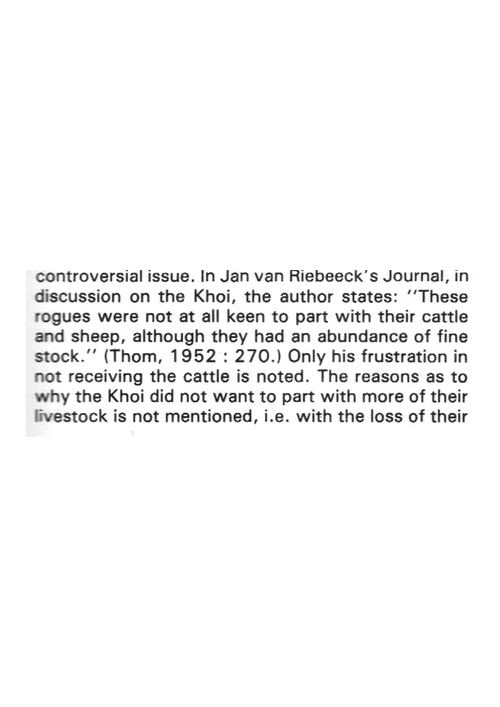
In Van Riebeeck's own journal, he writes about the Khoi with frustration: 'These rogues were not at all keen to part with their cattle and sheep, although they had an abundance of fine stock.' (Thom, 1952: 270.)
The textbooks only noted Van Riebeeck's frustration at not receiving the cattle. They completely omitted the reasons why the Khoi did not want to part with their livestock, that losing their cattle meant losing their wealth, their food source, and their entire way of life.
The Bias Exposed
This is a one-sided portrayal. We only hear the coloniser's frustration, never the Khoi's perspective. The textbooks made Van Riebeeck the hero of the story and the Khoi mere obstacles to his progress. The Khoi were not 'rogues' - they were people defending their property and livelihood from a foreign invader who wanted to take what was theirs.
Why It Matters
When history only tells one side, it teaches us that the coloniser's view is the only view that matters. The Khoi were erased from their own story. This bias still shapes how South Africans understand who founded the nation and who has a legitimate claim to the land.
About This Post
This is the first in a five-part series on biases against the Khoi in South African history textbooks, based on Jacqueline Aird's Investigation of the Nature of Bias.